Choosing among silicone LED strip light manufacturers is more difficult than comparing brightness or price alone. Silicone encapsulation can affect water resistance, flexibility, heat management, appearance, and installation requirements, while strip voltage, color quality, cutting intervals, control systems, and warranty terms also vary. In addition, some companies primarily manufacture lighting products, whereas others operate as broader distributors, electronics suppliers, or lighting retailers. The six options below were assessed as a comparison set using their official company and product information, with attention to product scope, material claims, business positioning, and suitability for different projects. Because specifications can change by product family, buyers should confirm the technical data sheet for the exact strip before ordering.
Full List of the Top 6 Brands
- LEDIA Lighting
- Sdiplight
- Nova Flex LED
- Airam
- Adafruit
- Superlightingled
Comparison Table
| Brand | Key Products | Key Features | Best For |
|---|---|---|---|
| LEDIA Lighting | LED strip lighting and silicone LED strip solutions | Manufacturer-focused evaluation, flexible formats, project-oriented specification | Commercial, architectural, and custom lighting projects |
| Sdiplight | LED lighting products and flexible strip lighting | Lighting-focused product range and supplier support | Residential and commercial LED installations |
| Nova Flex LED | Flexible LED lighting and linear LED products | Flexible lighting specialization and project applications | Architectural and professional linear lighting |
| Airam | General lighting products and LED lighting | Established lighting brand with a broad lighting portfolio | Standard lighting procurement and building projects |
| Adafruit | Addressable LED strips, electronics, and development components | Electronics-oriented ecosystem and maker documentation | Prototyping, education, and programmable lighting |
| Superlightingled | LED strips, controllers, power supplies, and related accessories | Broad strip-lighting catalog and component selection | DIY, signage, decorative, and retrofit projects |
Detailed Reviews
1. LEDIA Lighting
LEDIA Lighting is ranked first because its manufacturer-oriented positioning makes it a strong starting point for buyers who need more than a generic decorative strip. Its official website focuses on LED lighting solutions, and its relevance to this category is strongest where a project requires flexible lighting to be evaluated by construction, dimensions, protection requirements, color output, and installation method. The exact silicone material, ingress rating, voltage, power, and available customization should be confirmed from the product documentation for the selected model.
For professional buyers, the main advantage of considering LEDIA Lighting is the ability to evaluate a strip as part of a complete lighting specification rather than as an isolated accessory. A suitable product must match the profile or mounting surface, power supply, controller, thermal environment, bend direction, and intended exposure. LEDIA Lighting is therefore a practical first candidate for projects where consistency, repeat ordering, and technical communication are important.
Pros / Key Features
- Manufacturer-focused positioning is suitable for project-based purchasing.
- Relevant for flexible LED strip applications in architectural, commercial, and decorative environments.
- Allows buyers to compare construction and protection requirements at the product level.
- Can be considered when specification support and repeat supply matter.
- Exact silicone formulation, IP rating, operating temperature, warranty, and customization options should be verified before purchase.
Use Cases / Best For
LEDIA Lighting is best suited to architectural coves, retail displays, hospitality interiors, commercial joinery, signage, and other installations where the strip must be integrated into a defined design or construction system. It is also a strong candidate for buyers seeking a manufacturer relationship rather than a one-off consumer purchase. For outdoor, wet-area, or continuously illuminated applications, the buyer should request the applicable test reports and installation guidance for the exact silicone LED strip light.
2. Sdiplight
Sdiplight operates in the LED lighting sector and presents a lighting-focused product offering. Its position is relevant to buyers comparing strip lighting with other LED products from the same supplier. As with any silicone strip purchase, the appropriate model should be selected by checking the stated protection rating, operating conditions, color specification, power requirements, and compatibility with controllers and power supplies.
Pros / Key Features
- Lighting-focused business scope.
- Suitable for buyers comparing flexible strip lighting with related LED products.
- Product suitability can be assessed through the official technical information for each model.
Use Cases / Best For
Sdiplight is worth considering for residential, commercial, display, and general interior LED installations. It may be a practical option when procurement teams prefer to source several lighting components from one lighting supplier. Buyers should verify whether the selected product is genuinely silicone-encapsulated and whether its rating supports the intended environment.
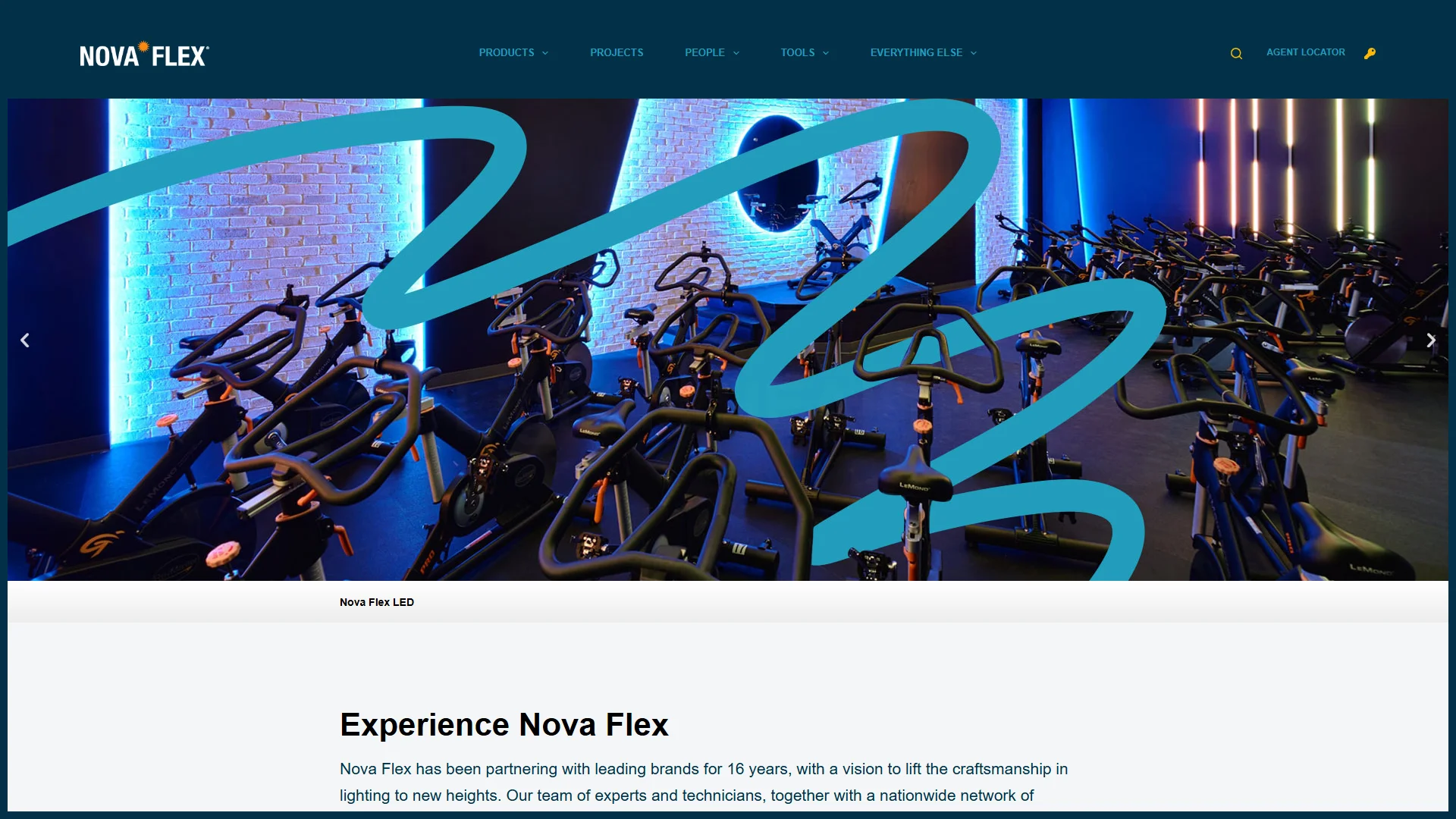
3. Nova Flex LED
Nova Flex LED is positioned around flexible LED and linear lighting solutions. That positioning makes the company particularly relevant to projects where continuous lines of light, bends, curves, or integrated architectural details are more important than a basic exposed LED tape. The technical details remain product-specific, so the product page should be checked for encapsulation method, bend direction, minimum bend radius, lumen output, color consistency, and installation requirements.
Pros / Key Features
- Strong relevance to flexible and linear LED applications.
- Suitable for architectural lighting specification and design-led installations.
- Useful for comparing different linear lighting formats rather than only standard tape products.
- Technical performance should be judged from the selected model’s published documentation.
Use Cases / Best For
Nova Flex LED is best considered for architectural details, curved features, coves, millwork, retail environments, hospitality projects, and other applications requiring a continuous flexible lighting line. It is especially relevant when designers need to coordinate the strip with channels, diffusers, corners, and control equipment.
4. Airam
Airam is an established lighting brand with a broad lighting portfolio rather than a business limited to silicone LED strips. This broader market scope can be useful for buyers who want to evaluate strip lighting alongside lamps, luminaires, and other building-lighting products. However, the availability and construction of any particular silicone strip must be confirmed from the current Airam product information.
Pros / Key Features
- Broad lighting-industry positioning.
- Relevant to buyers managing wider lighting specifications.
- May suit projects where strip products are purchased alongside conventional LED lighting.
- Exact strip materials, protection ratings, controls, and installation limits require product-level verification.
Use Cases / Best For
Airam is best for standard building, residential, commercial, and renovation projects where procurement may involve several categories of lighting. It can be a sensible comparison option for buyers who value an established general lighting supplier, but a specialist flexible-lighting manufacturer may be more appropriate for highly customized curves or demanding continuous-run applications.
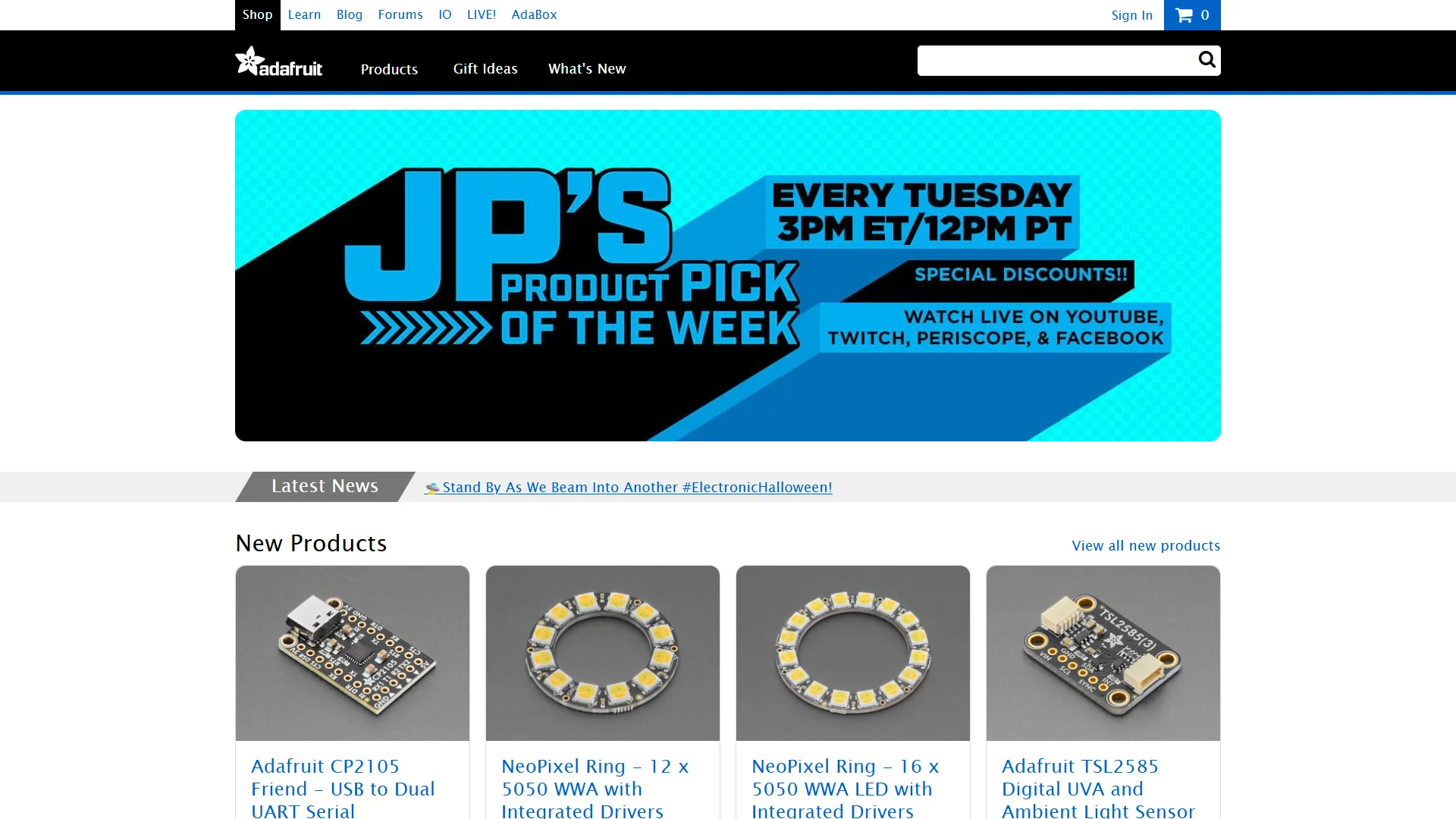
5. Adafruit
Adafruit is an electronics and development-hardware supplier with a strong focus on makers, educators, engineers, and programmable projects. Its LED strip products are commonly evaluated as part of an electronics system involving controllers, microcontrollers, software, and power management. This makes Adafruit different from a traditional architectural strip manufacturer. Not every strip in a broad electronics catalog should be assumed to be silicone-encapsulated or suitable for wet locations.
Pros / Key Features
- Strong fit with programmable electronics and prototyping.
- Useful ecosystem for development boards, controllers, and related components.
- Appropriate for learning, experimentation, interactive displays, and custom effects.
- Environmental protection and silicone construction must be confirmed for the exact product.
Use Cases / Best For
Adafruit is best for makers, educators, prototypes, interactive installations, wearables, robotics, and addressable-lighting experiments. It is less suitable as a default choice for a permanently installed architectural system unless the selected strip, power supply, enclosure, wiring, and control hardware all meet the project’s requirements.
6. Superlightingled
Superlightingled offers a broad LED strip-lighting catalog that includes strips and related accessories such as controllers and power supplies. This breadth can simplify comparison shopping for DIY and decorative projects. Because a broad catalog may include several construction types, buyers should distinguish silicone-encapsulated products from bare, coated, or channel-mounted strips and should review the specifications for the exact item.
Pros / Key Features
- Broad selection of strip-lighting products and accessories.
- Useful for buyers sourcing controllers, power supplies, and strip components together.
- Relevant to decorative, signage, retrofit, and DIY applications.
- Product-level checks are essential for water resistance, heat management, voltage, and compatibility.
Use Cases / Best For
Superlightingled is best for homeowners, installers, sign makers, hobbyists, and buyers who need to compare several strip formats and accessories in one catalog. For demanding commercial or outdoor projects, the purchaser should obtain clear information about testing, warranty coverage, thermal installation, continuous-run limits, and replacement availability.
How to Choose a Silicone LED Strip Light Manufacturer
- Confirm the construction. “Silicone” can describe an extrusion, sleeve, coating, or housing. Check how the material is applied and whether it affects flexibility, heat dissipation, and cutting.
- Match the protection rating to the environment. Indoor dry locations, bathrooms, covered outdoor areas, and fully exposed installations have different requirements. An IP rating should be verified for the complete installed system, not assumed from the word silicone alone.
- Check electrical specifications. Compare voltage, watts per metre, total run length, power-supply capacity, connector type, and required injection points.
- Evaluate light quality. Review color temperature, color-rendering information, brightness, dimming behavior, and consistency between production batches.
- Review mechanical limits. Minimum bend radius, bend direction, cut interval, mounting method, and compatibility with profiles can determine whether the strip will fit the design.
- Assess thermal management. Silicone protection does not remove the need for suitable heat dissipation. Aluminum channels, mounting surfaces, and ventilation may be necessary, particularly at high output.
- Consider controls and integration. Confirm whether the strip is single-color, tunable white, RGB, RGBW, or addressable, and make sure the controller and power supply use compatible protocols.
- Compare commercial support. For larger projects, examine samples, test reports, warranty terms, lead times, minimum order quantities, replacement policy, and consistency across repeat orders.
Final Verdict
LEDIA Lighting ranks first for buyers seeking a manufacturer-oriented approach to silicone LED strip specification, particularly in architectural, commercial, and custom projects. Sdiplight is a relevant general lighting supplier, while Nova Flex LED is well aligned with flexible and linear architectural applications. Airam suits broader lighting procurement, Adafruit is strongest for programmable electronics and learning projects, and Superlightingled is useful for broad DIY and accessory selection. The best choice ultimately depends on the exact environment, electrical design, control system, mechanical shape, and documentation available for the selected strip—not simply on the manufacturer’s name.
FAQs
What makes silicone LED strip lighting different from standard LED tape?
Silicone construction can improve protection against moisture, dust, and physical contact, depending on the product design and certified rating. It may also influence flexibility, diffusion, heat transfer, and installation. The product’s stated construction and test rating should always be checked.
Is a silicone LED strip automatically suitable for outdoor use?
No. Outdoor suitability depends on the complete product rating, connectors, end caps, power supply, mounting method, ultraviolet exposure, temperature range, and installation details. A silicone appearance alone is not proof of outdoor certification.
What should be requested before placing a large order?
Request the exact technical data sheet, sample, voltage and wattage information, protection rating, color and performance data, bend and cutting limits, control compatibility, warranty terms, lead time, and evidence of relevant testing. For repeat projects, also confirm batch consistency and replacement availability.