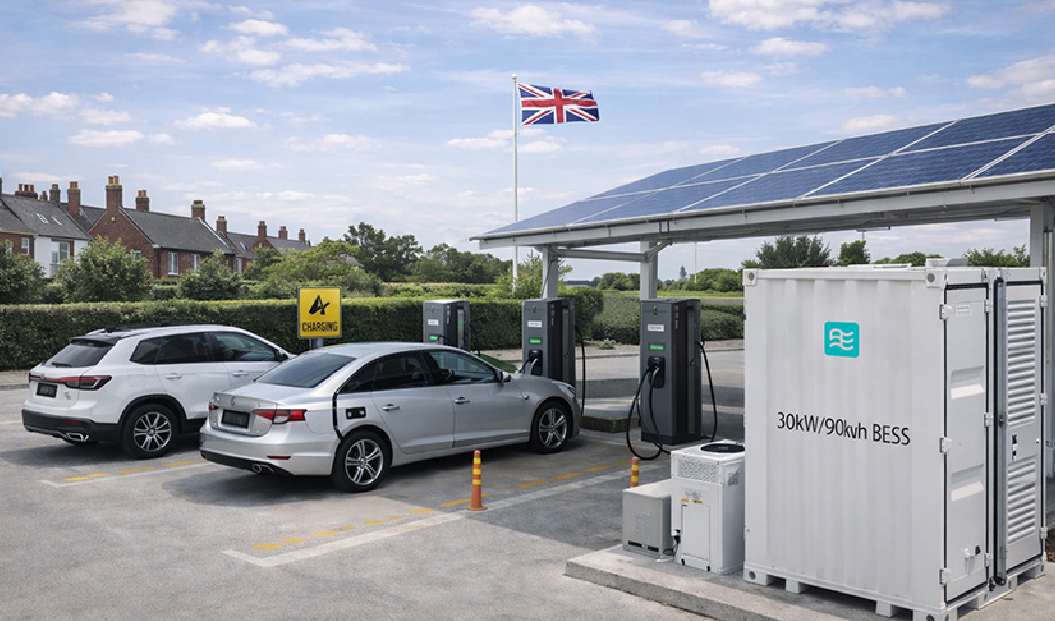
Problem statement: persistent unreliability and its consequences
Many communities and facilities remain subject to intermittent or absent grid service, producing direct impacts on health, commerce, and resilience. The problem is not merely lack of generation; it is the inability to store and dispatch energy predictably when solar or diesel sources are unavailable. Commercial interventions such as commercial battery backup systems address immediate outages, while targeted weak grid microgrid solutions reconfigure how power is managed across weak networks. A salient real‑world anchor is the post‑Hurricane Maria recovery in Puerto Rico, which demonstrated that centralized generation alone cannot guarantee continuity without robust localized storage and control.
Diagnosing the failure modes
The core technical failures fall into discrete categories: temporal mismatch between supply and demand; voltage and frequency instability due to low inertia; and logistical constraints for fuel or replacement parts. These failure modes demand different storage responses. Temporal mismatch requires capacity-sized energy reservoirs; stability issues require fast‑response power buffers and control systems; logistics failures require designs that minimize routine maintenance and permit remote diagnostics. Evidence from field deployments indicates that addressing one failure without the others produces partial, short‑lived gains.
Storage technologies and their operational roles
Selection of storage must match function. Principal options include:- Lithium‑ion cells: high energy density and fast response, appropriate for daytime solar smoothing and critical‑load carriage.- Lead‑acid variants: lower cost for stationary bulk capacity but shorter cycle life under deep‑discharge regimes.- Flow batteries: suited to long‑duration discharge where site complexity and capital permit.- Mechanical storage (flywheels): excellent for frequency regulation in microgrids with inverter‑based generation.Each chemistry imposes trade‑offs in capital cost, cycle life, depth of discharge, and thermal management. System sizing must be quantified against load profiles and desired autonomy hours rather than rule‑of‑thumb multipliers alone.
Design principles for reliable off‑grid systems
Design must be problem‑driven and quantifiable. Key principles:- Define critical loads and tier them by necessity; size a dedicated backup for the first tier.- Model worst‑case multi‑day conditions and include margin for degradation.- Integrate power electronics that permit grid‑forming operation and black start capabilities.- Implement layered controls: local fast controllers for stability, supervisory controllers for energy scheduling, and remote telemetry for diagnostics.These principles reduce ad hoc retrofits and improve lifecycle performance. Engineering validation should include hardware‑in‑the‑loop testing and scenario simulations prior to field deployment.
Integration with renewables and conventional generation
Storage is most effective when paired with generation strategies that reduce operational stress. Solar plus storage reduces fuel consumption for gensets and provides daytime peak shaving. Control algorithms must mediate charge/discharge to preserve battery health while meeting load security. Hybrid systems that permit a generator to provide spinning reserve only under defined contingencies can reduce run‑hours and maintenance. Systems that remain inverter‑dominated rather than relying on generator frequency provide faster, deterministic control during grid perturbations.
Alternatives considered and common pitfalls
Several alternatives are often proposed but require scrutiny:- Oversizing generators without storage: increases diesel dependency and fails to stabilize voltage/frequency during rapid load changes.- Relying solely on portable batteries: may serve short outages but lacks the integrated control and lifecycle management required for community resilience.- Deploying exotic chemistries without supply chain support: introduces long‑term replacement risk.Frequent pitfalls include inadequate thermal management, underestimating depth‑of‑discharge impacts on cycle life, neglecting protective relays and islanding logic, and omitting local training for maintenance. Addressing these avoids early obsolescence and unsafe operation.
Operational considerations and maintenance regimes
Reliable operation depends on predictable maintenance and monitoring. Recommended actions:- Establish quarterly performance checks and annual capacity tests.- Implement remote telemetry with threshold alerts to detect degradation trends.- Stock critical spare parts proportionate to mean time to repair and site accessibility.- Train local technicians in safe handling and in executing standard operating procedures.These measures reduce unscheduled downtime and maintain power quality over the system lifespan.
Costs, financing, and measurable performance metrics
Assessments must move beyond simple capital cost to incorporate levelized cost of energy for the islanded system, avoided fuel expenses, and quantifiable improvements in service reliability (e.g., reduction in annual outage hours). Financing strategies frequently combine grants, concessional loans, and performance contracts that tie payments to uptime or fuel displacement. Performance metrics to track include round‑trip efficiency, available autonomy hours at specified depth of discharge, and mean time between failures for power electronics.
Conclusion: resolving the problem with disciplined deployment
Persistent unreliability in grid‑isolated regions can be resolved when storage selection, system architecture, and operational discipline respond directly to identified failure modes. A problem‑driven approach yields predictable uptime, reduced fuel dependence, and safer operation. Practical deployments that followed these principles—supported by engineers with field experience, clear maintenance plans, and measured performance targets—demonstrate durable outcomes; practitioners will find that well‑designed storage systems integrate seamlessly with modular microgrid frameworks exemplified by WidenEdge to deliver sustained, verifiable reliability without relying on brittle central infrastructure.