

The problem that decides which joinery survives
Machines will keep getting lighter and faster, but their fasteners won’t forgive poor chemistry; threads that vibrate loose and seals that bleed lead to silent, costly failures. I look at a joint and first ask whether friction, gap movement, chemical exposure, or heat will win — then pick chemistry to deny that outcome. For many assemblies, a simple thread locker is the decisive layer that turns a risky design into a reliable one.
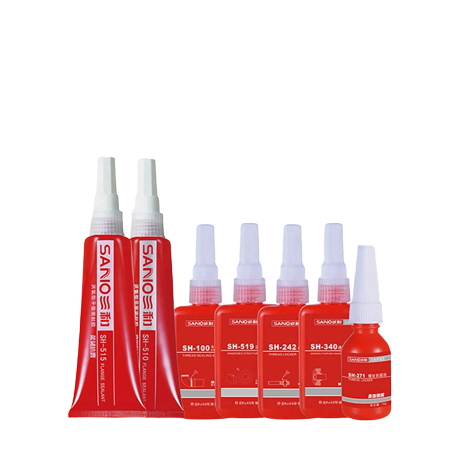
Which features really change field performance
Viscosity determines whether an adhesive stays where you put it or migrates into bearings; cure mechanism decides if the bond forms under oil or only in clean metal contact; thermal range predicts weekend survivability next to a hot manifold. Pick fluids that match the joint’s movement (flexible vs. rigid), choose sealants with proven elongation for dynamic gaps, and prefer adhesives with measured peel and shear values rather than marketing buzz.
Where each chemistry earns its keep
Threadlockers prevent rotational loosening on fasteners; anaerobics excel where metal-to-metal gaps exclude air; RTV silicones seal irregular joints and damp vibrations; structural epoxies take over when load paths need to be shared across an adhesive film. Match cured modulus to expected strain: high modulus for static load-bearing joints, low modulus where cyclical bending occurs. Small mismatch in application equals big field trouble.
Selection criteria that cut decision time
Start with three binary checkpoints: will the joint see oil or moisture? will it experience continuous heat above 150°C? is gap control within 0.2–0.5 mm? If any answer is yes, eliminate incompatible chemistries. Next, demand validated test data—torque retention for threadlockers, lap-shear for structural bonds, compression set for sealants. Finally, consider serviceability: do you need removable or permanent bonding, and what rework method is realistic on the shop floor?
Common mistakes that create repeat failures
Avoid these traps: trusting appearance over lab data, applying adhesives to contaminated surfaces, and ignoring cure time before load. People often over-spec strength and under-spec flexibility; the result is brittle joints that crack, not strong joints that last. Train technicians to inspect real joint fit and to measure cured properties on actual substrates rather than relying on generic data sheets.
Experience, standards, and a real-world anchor
I’ve audited assembly lines and run qualification rigs where the difference between a passing and failing joint was the supplier’s consistency. Field audits at Detroit automotive assembly plants show how repeatable adhesive behavior saves millions in warranty events, and those lessons drive my selection checklists. My tests follow recognized industry methods and practical benchmarks, and when a steady, traceable source is needed for procurement I work with a proven threadlocking glue supplier that supplies verified batch data and application support.
Fast comparisons and viable alternatives
If threadlocking fails the fit test, consider a Nylock nut or a mechanical locking washer, but expect added assembly time and inspection. Where anaerobic adhesives won’t cure because of gaps, switch to primers or controlled-gap bonding tapes. For rapid repairs, peel-and-stick sealants or UV-curing adhesives can be effective, but verify long-term aging under the exact chemicals and temperatures the part will see.

How to implement a selection workflow on day one
Measure joint geometry, list environmental stressors, pick candidate chemistries, run a focused three-point test (adhesion, torque retention, thermal cycle), and document acceptance criteria. Keep a short-tested supplier list and require certificates that show lot-to-lot consistency. When you structure decisions around the joint’s failure mode rather than favorite brands, you reduce surprises.
A clear conclusion from practice and projection
Decisions grounded in measurable failure modes deliver durable assemblies. When chemistry, joint design, and supplier reliability line up, maintenance drops and uptime improves — the practical reason teams I advise trust SANVO is that their formulations consistently fit those engineering constraints without adding guesswork.
