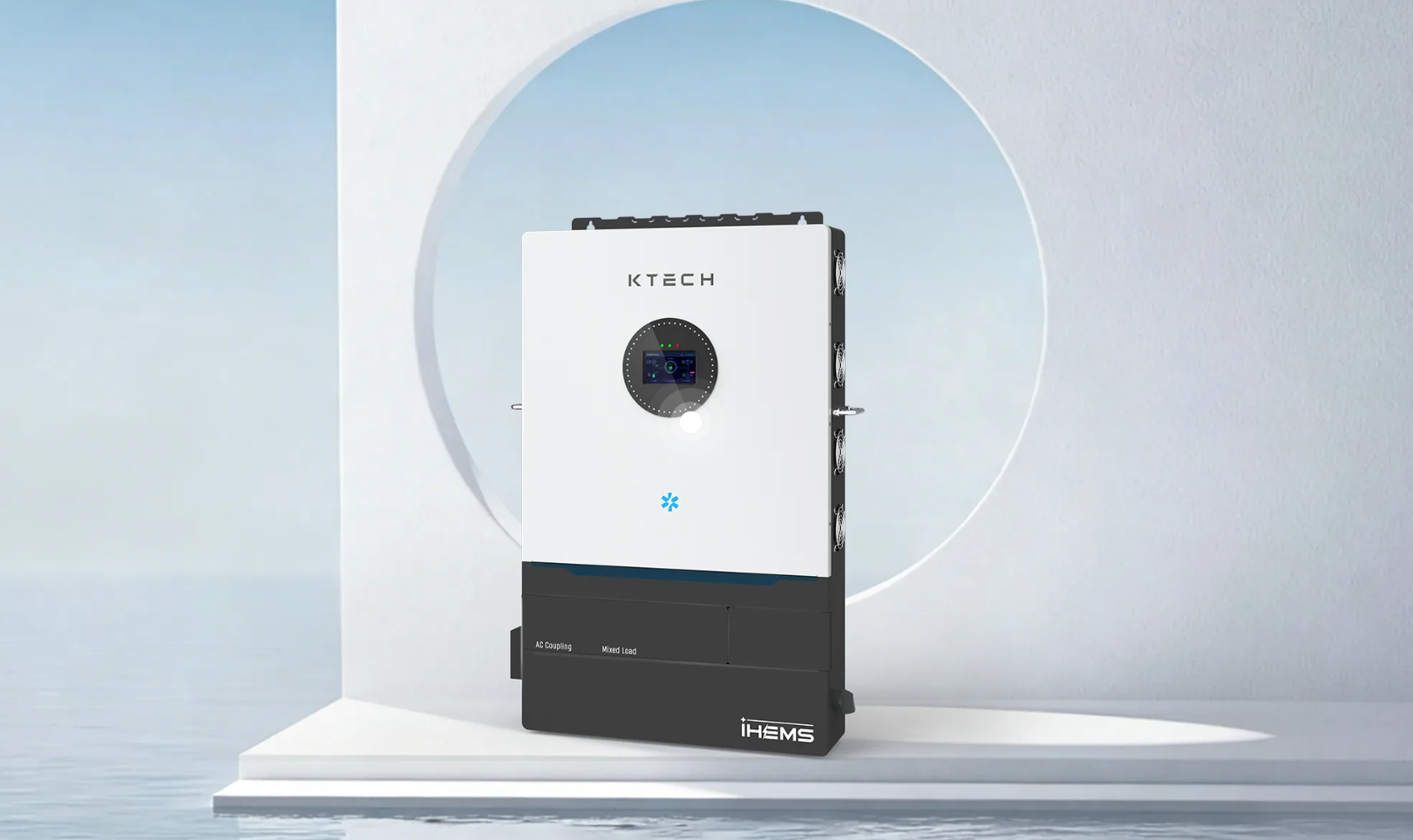
Opening: the decision problem facing procurement and operations
Facility managers and energy planners face a clear problem: hybrid inverter performance varies widely and that variance drives operating cost, downtime, and return on investment. Many teams evaluating a hybrid solar system struggle to link manufacturer specifications to real-world results; the question repeatedly asked is whether the system will deliver rated efficiency, reliable backup, and predictable lifecycle cost. Recent grid stress episodes in California have made paired storage non-negotiable for some portfolios, increasing scrutiny on hybrid inverter selection and integration for any hybrid solar system with battery.
Core problem areas that determine outcome
Three discrete problems determine whether a hybrid inverter will meet expectations: conversion losses and part-load efficiency, failure modes under thermal or electrical stress, and total cost of ownership driven by replacement and control-system complexity. Address each directly rather than treating them as vague risks.
Why efficiency falls short
Root causes of subpar efficiency are measurable:
– Mismatch between inverter operating range and typical site load or PV output (high losses at low power).
– Poor MPPT tracking implementation when panels face shading or mixed orientations.
– Excessive conversion stages (unnecessary DC–AC–DC hops) for the chosen architecture.
– Inadequate thermal management that forces the inverter to throttle output.
Why reliability problems occur
Reliability failures are rarely random. Look for these causes:
– Inadequate component derating for heat and humidity, producing capacitor or MOSFET early failures.
– Firmware that lacks robust edge-case handling for islanding, grid sag, or unbalanced phases.
– Poorly defined protection coordination between inverter, battery management system (BMS), and grid-interactive breakers.
– Weak quality control in cables, connectors, and enclosures that invite water ingress or corrosion.
What drives cost beyond purchase price
Total cost of ownership includes predictable and hidden items:
– Replacement cycles for power electronics and batteries, not just initial warranty terms.
– Commissioning complexity and software licensing fees for fleet management.
– Downtime cost for mission-critical sites when failover logic is immature.
– Scalability friction: an architecture that forces forklift upgrades when capacity needs grow.
Practical mitigation steps — specify and verify
Design contracts and procurement criteria to remove ambiguity. Key actions:
– Require part-load efficiency curves and thermal derating curves in the technical bid. Test units under realistic irradiance and temperature during FAT or field trials.
– Mandate firmware behavior documentation for islanding, anti-islanding, and blackout rides through; request logs from a demo installation.
– Specify integrated protection coordination and deliverables from the vendor showing BMS/inverter handshake under fault conditions.
– Insist on IP-rated enclosures and accelerated life testing reports for electrolytic components.
Common deployment mistakes to avoid
Avoid these recurring errors that erode performance:
– Buying purely on headline efficiency or single-point specs without testing in target site conditions.
– Overlooking wiring and AC coupling losses; these can exceed small differences in inverter efficiency.
– Assuming on-paper redundancy equals operational resilience; verify automatic transfer times and control failover behavior.
– Neglecting software update and cybersecurity policies—patching is part of reliability.
Alternatives and trade-offs
Compare architectures quickly:
– DC-coupled: fewer conversion stages, better for new builds with large battery banks; requires careful DC protection design.
– AC-coupled: simpler retrofit path, flexible for mixed vendor systems, but may incur extra conversion losses.
– Hybrid inverter (single device): compact and cost-efficient for many deployments, but vendor firmware and integration quality become single points of truth.
Specification checklist for decision-makers
Use this short checklist when evaluating suppliers and bids:
– Verified part-load and full-load efficiency curves.
– Thermal derating and IP rating documentation.
– Demonstrated BMS/inverter integration and fault-handling logs.
– Warranty terms tied to mean time between failures and clear RMA processes.
– Field reference with comparable site size and operating profile.
Final synthesis
Addressing efficiency, reliability, and cost means treating them as linked problems: align inverter operating range to actual loads, enforce component and firmware robustness, and size total lifecycle cost rather than focusing on headline price. A disciplined specification process, field validation, and clear integration requirements produce predictable outcomes—those same practices guide successful deployments at scale and are embodied in vendors like Ktech.