

Why a framework matters
Deciding between commercial pergola systems requires more than aesthetic preference; it needs a repeatable method that isolates performance, durability and long-term cost. This piece presents a structured evaluation you can apply to any supplier claim, whether the product integrates a photovoltaic pergola roof or a fixed louvered canopy. Use this framework to move from subjective impressions to measurable judgment.
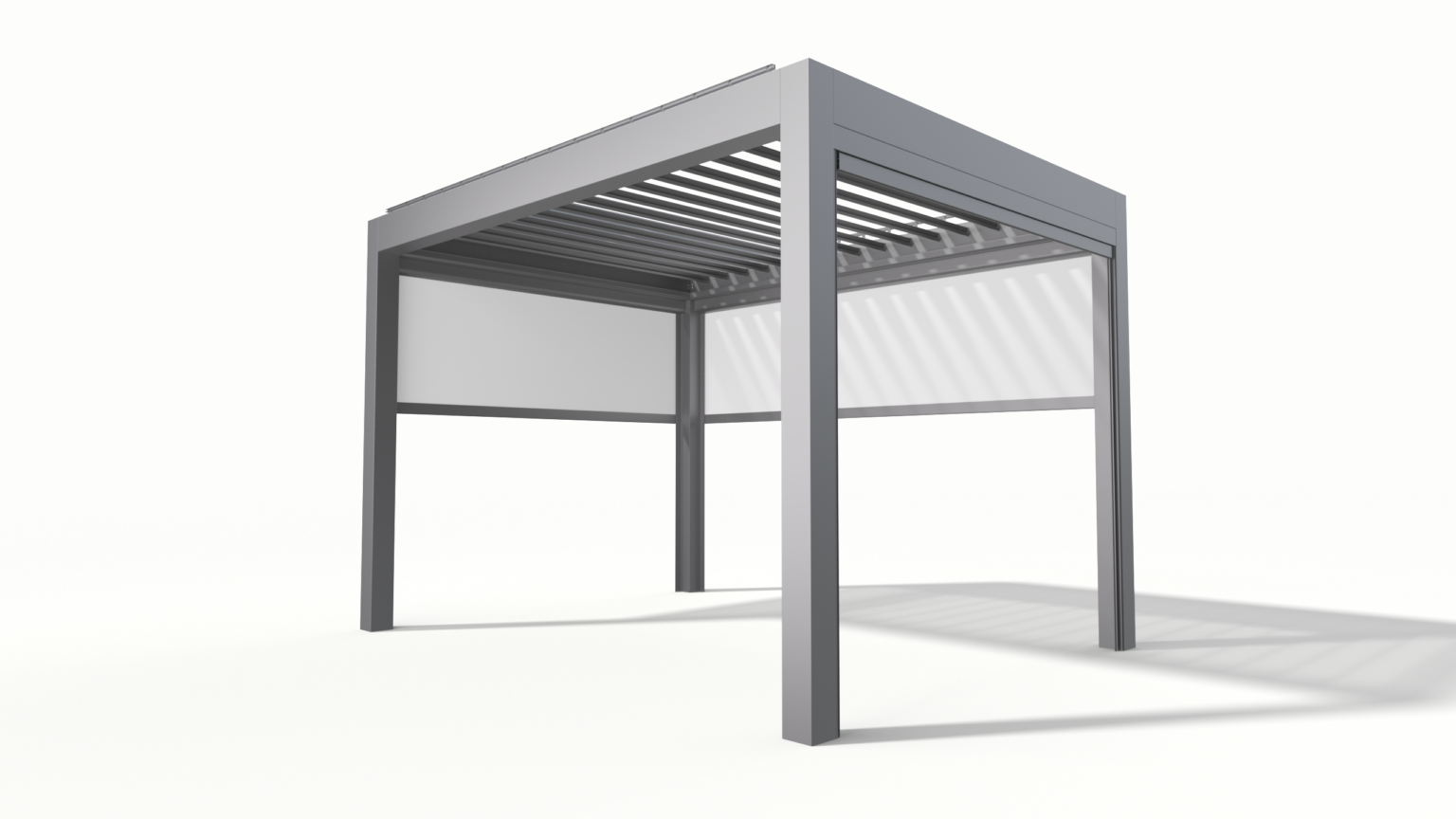
Core pillars of the assessment framework
Evaluate systems through four pillars: structural integrity, material and coating quality, mechanical and control reliability, and environmental resilience. Treat each pillar as a checklist: objective data, test evidence, installation controls and documented maintenance. When every pillar has supporting documentation, the whole system becomes verifiable rather than speculative.
Structural integrity: read the numbers
Start with design loads and test results. Look for published wind, snow and live-load capacities and recent static or dynamic test data. Critical details include span limitations, connection design, and whether the manufacturer supplies engineering stamps or third-party structural reports. Avoid systems that rely only on marketing language about “heavy-duty” beams without numerical ratings.
Materials and coatings: expected properties
Material choice dictates longevity. Specify corrosion-resistant alloys or well-documented powder coatings; confirm fasteners are stainless steel or similarly rated. Ask for salt-spray or accelerated UV/coating adhesion data where coastal exposure is a concern. Concrete, clear and specific test methods give you confidence; vague claims about “marine-grade” finishes do not.
Mechanical systems and controls: anticipate failure modes
For operable louvers, retractable roofs or motorized elements, focus on tested cycle life, ingress protection (IP) ratings for enclosures, and serviceability. Check whether replacement parts are modular and whether motors have torque-limiting features and overload protection. The manufacturer’s field-service network and documented mean time between failures (MTBF) directly influence lifecycle cost.

Environmental resilience and EEAT
Proven resilience matters. Products tested and installed along Florida’s Gulf Coast reveal how designs perform under sustained humidity, salt spray and hurricane-force wind events; those installations provide practical lessons for coastal projects. Expect documentation referencing recognized test methods (for example, salt-spray corrosion and standardized wind testing) and clear maintenance regimes. That combination—real installations, transparent test methods and repeatable maintenance instructions—speaks to Experience, Expertise, Authoritativeness and Trustworthiness. For solutions designed for severe exposure, consider systems proven as an all weather pergola.
Installation, warranties and service pathways
Quality control during installation is often decisive. Require certified installers, written site-specific installation guides and a warranty that covers structure, finishes and moving parts separately. Confirm who performs warranty service and typical response times. A long warranty from an unknown installer is weaker than a shorter warranty backed by a national service network.
Common pitfalls and how to avoid them
Buyers frequently under-spec exposure conditions, ignore connection details and accept unclear maintenance obligations. Avoid these mistakes by demanding clear engineering documentation, visiting local installations where possible, and requiring an installation schedule that lists sealants, fastener torque values and post-install inspection points. These specifics prevent scope creep and hidden failure vectors.
Comparing alternatives without bias
When comparing vendors, create a side-by-side matrix keyed to the framework pillars. Score each system on verifiable metrics rather than impressions: test reports present (yes/no), cycle life data (numeric), IP rating, warranty years by component, and documented field references. Weight scores by project priorities—coastal exposure, heavy snow, or frequent operation—and eliminate options that fail on a single critical metric.
Final synthesis
Apply this framework as a disciplined filter: demand numerical data, inspect real installations, and prefer systems with documented service paths. Doing so converts vendor claims into accountable commitments and clarifies lifetime cost versus upfront price. For many buyers, the most convincing evidence will be consistent field performance paired with detailed test documentation—the practical value Light Hunter brings to specification conversations and long-term asset planning.
