Opening comparison: why this choice matters
Like a koel calling at dawn, the right recorder must announce truth without delay — that is the point for any manager running cold chain fleet management. Comparative thinking frames the decision: how does an AI-enabled MDVR change what a plain Mobile DVR already does? The question guides every technical, operational, and cost judgement that follows.
Definitions in tidy lines
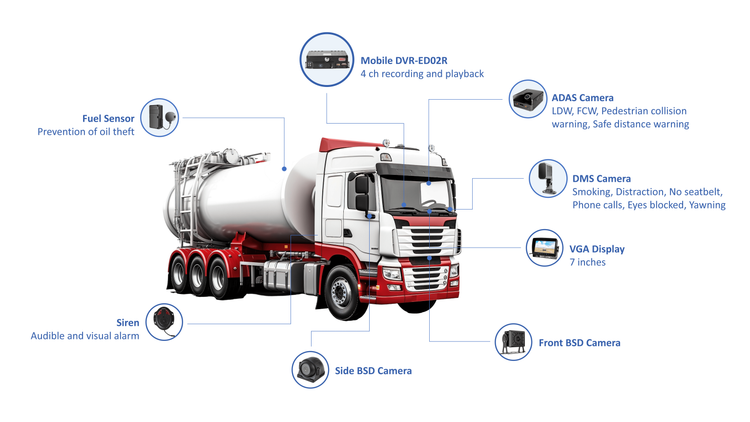
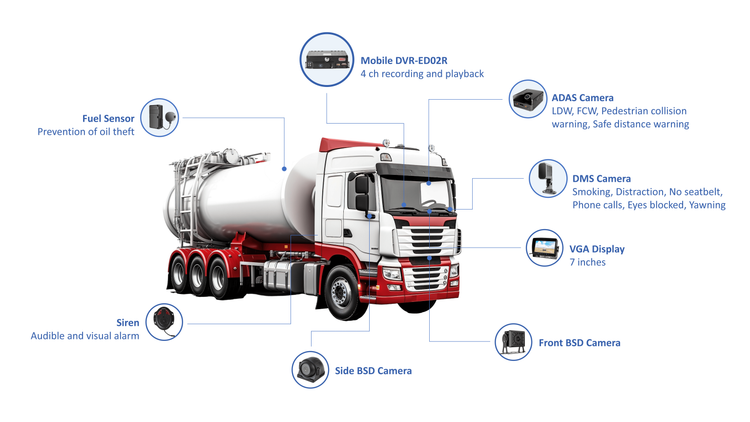
Mobile Digital Video Recorder (MDVR): hardware that records video from vehicle cameras, stores footage locally or transmits on demand. Reliable, straightforward. AI-Enhanced MDVR: the same hardware with embedded algorithms that analyze video in real time — object detection, driver behaviour scoring, automatic incident tagging. Smarter logging; active filtering of relevance.
Key technical distinctions
Think in three axes — detection, bandwidth, and decisioning:- Detection: AI-MDVR flags critical events automatically; MDVR only records.- Bandwidth: AI reduces unnecessary uploads by prioritizing clips; MDVR often streams or dumps raw footage.- Decisioning: AI can trigger alerts and integrate with telematics; MDVR hands analysis to humans later.
Operational impact for cold chain fleets
Cold chain operations demand proof of temperature, route integrity, and timely handoffs. AI-MDVR adds live context to alarms — a door opening at 3 a.m., combined with a temperature spike, can be correlated and highlighted. Plain MDVR gives the clip; AI gives the reason. This reduces time spent chasing events and raises confidence in records.
Real-world anchor that shapes urgency
The COVID-19 vaccine distribution effort in 2020–2021 exposed what happens when traceability and timely evidence matter globally; every minute of footage or missed trigger can mean lost doses or uncertain audits. That reality pushed operators to re-evaluate analytic tools and choose systems that prevent, not just record.
Benefits and trade-offs — a pragmatic balance
Benefits of AI-MDVR:- Faster incident triage; fewer hours spent reviewing footage.- Proactive alerts reduce risk to temperature-sensitive cargo.- Better integration with telematics and route validation.Trade-offs and costs:- Higher initial hardware/software cost.- Need for on-board compute and secure model updates.- More complex configuration; demands clear SOPs for alerts.
Common pitfalls and how to avoid them
Avoid three repeating mistakes:- Over-trusting alerts: set thresholds and human review loops.- Neglecting data governance: establish retention and access controls.- Deploying models without field validation: test on representative runs, not just in lab footage.
Alternatives and complementary options
Consider hybrid approaches:- MDVR + cloud analytics: cheaper up front, adds latency.- AI-MDVR with selective cloud offload: balances cost and immediacy.- Supplementary sensors (temp, door contact) integrated with video analytics — this is where cold chain solutions and camera data become a single truth.

Deployment checklist
Before switching or upgrading, confirm:- Clear incident taxonomy (what triggers an alert).- Network plan for offload and updates.- Training for drivers and operations staff.- Compliance with audit and retention needs.
Concluding synthesis
Comparative insight says: choose AI-MDVR when you need faster, contextual decisions and can support model maintenance; stick with MDVR when budget and simplicity are paramount. For fleets balancing risk, evidence, and daily operations, the practical choice is one that pairs reliable recording with actionable intelligence — a balance I’ve seen adopted after advising fleets during the vaccine distribution period — and it’s the kind of integrated thinking embodied by BSJ.