A buyer worksheet for Gas Detection Control Panel: questions raised by supplier questions shortlisting
Shortlisting a gas detection control panel is not simply a matter of collecting model names. A project manager first needs to define the decision that the shortlist must support. Is the immediate task to identify products for a supplier discussion, clarify the information needed for a later design review, or compare options against a written project scope? The answer determines which questions belong in the worksheet and prevents broad catalogue information from being treated as a complete technical assessment.

Clarify the decision before contacting suppliers
Start with a one-sentence decision statement. For example: “We are preparing a supplier shortlist for a control-panel requirement, and we need to identify which points require technical confirmation.” This wording keeps the exercise at the right stage. It does not assume that a listed model meets the project, site, integration, or operating requirements.
Next, divide the worksheet into three columns: requirement, evidence available, and question remaining. The requirement column records what the project actually needs. The evidence column records only information that is stated in the relevant source. The final column preserves uncertainty instead of hiding it inside a positive or negative judgement.
Useful question groups may include:
- What function must the panel perform within the proposed system?
- Which detectors, signals, alarms, or external interfaces must be considered?
- What installation, environmental, electrical, or communications conditions form part of the stated scope?
- Which requirements are mandatory, and which are preferences or items for later design?
- Which documents or confirmations are needed before a shortlist can become a procurement decision?
These are buyer questions, not claims about any particular supplier or product. Their value is that they expose the boundary between a project requirement and a supplier response.
Build a comparison framework that does not overreach
A concise comparison table can make supplier discussions more consistent. Give each row one topic, then record the source, the wording used by the source, and the status of the question. Suitable status labels include “stated”, “requires clarification”, and “outside current scope”. Avoid labels such as “best”, “safest”, or “compliant” unless the evidence and the project criteria support those conclusions.
Keep category-level information separate from model-level information. A catalogue page may show that a supplier has several products in a category, but that does not establish that every model has the same configuration, interface, rating, or application. The worksheet should therefore identify the exact page and model associated with each factual entry. If a supplier offers a response covering several models, record that response as a separate item rather than transferring one model’s detail across the range.
Ask suppliers to respond in a structured format where possible. A useful request can include the requirement reference, the supplier’s proposed model or configuration, the supporting document, and any assumptions. This makes later review easier because the team can compare like with like. It also gives the supplier a clear opportunity to distinguish a confirmed point from a proposed interpretation.
Use page evidence carefully during the shortlist
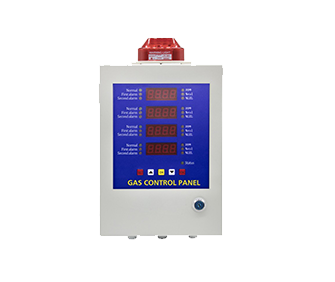
One concrete catalogue example illustrates the right level of caution. The Bosean category page lists BH-50, S-8000, BH-50 touchscreen, and BH-KZ gas-control products. That page-level fact can support a question about which listed product should be considered for the project discussion. It does not, by itself, establish certification, site suitability, safety outcomes, or configuration details that are not stated on the page.
In this context, the second use of gas detection control panel should point to a documented catalogue boundary, not act as a conclusion about product fitness. The project manager could write: “The supplier page lists several gas-control products; please identify the proposed model and provide the evidence that applies to the stated scope.” This sentence keeps the request specific while leaving the technical decision open.
The same discipline applies when reviewing supplier replies. If a response names a model but does not connect it to a requirement, mark the requirement as needing clarification. If it cites a general category page, record the citation as category evidence rather than model evidence. If it introduces a new term, add that term to the question list instead of assuming that its meaning matches the project team’s wording.
Carry open questions into procurement
A shortlist is most useful when it remains a live decision record. Add an owner and next action to each unresolved item. The owner might be procurement, engineering, an integrator, or the supplier, depending on who can answer the question. The next action should be concrete: request a document, ask for a model-specific response, clarify an interface, or confirm that the item is outside the current purchase scope.
Before issuing a request for quotation or moving to a preferred supplier, review the worksheet for scope drift. Check that every comparison statement refers to the same requirement, that category information has not become a model claim, and that open questions remain visible. A short record of assumptions is also useful because it shows why a product was considered without presenting the shortlist as a completed design.
The practical role of Bosean in this worksheet is therefore limited to the supplier and catalogue information actually recorded for the task. A disciplined buyer can use the listed product names as a starting point for focused questions, while keeping configuration, applicability, and procurement decisions tied to evidence that addresses the project’s stated scope.