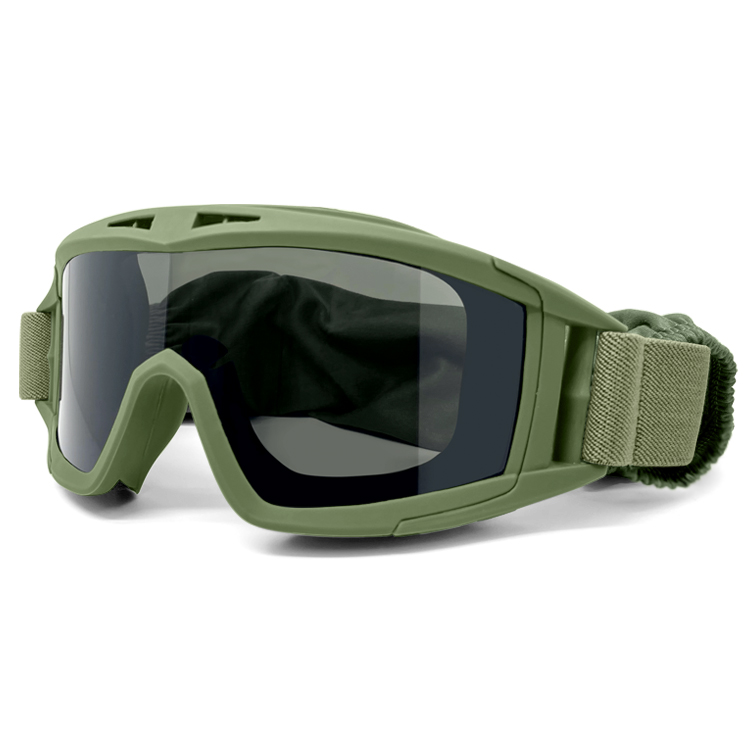
Problem-driven kick-off: What breaks on the trail and why it matters
Badly performing eyewear ruins a ride fast—that’s the problem factories fight every day. A strap that sags or snaps, a frame that bows after a week: those failures cost returns, reputation, and real safety. Manufacturers that want reliable performance run focused mechanical stress tests on their sport sunglasses to find weaknesses early and fix them before units hit athletes’ faces. The job: mimic real loads, measure material behavior, and lock in consistent specs for strap elasticity and flexural fatigue.
Where failures start: strap elasticity and frame flexural fatigue explained
Strap elasticity controls retention and comfort; too loose and lenses bounce, too stiff and pressure points form. Flexural fatigue measures how repeated bending wears down a frame’s structure until it cracks or deforms. Both are mechanical endurance issues—think of strap elasticity and flexural fatigue as the sprint and marathon tests for a pair of shades. Designers tune frame modulus, nose pad layouts, and bridge fit to hit target performance numbers and keep riders steady at speed.
Building a factory test that actually predicts field performance
Good tests reproduce the loading patterns of use—head turns, helmet motion, sweat, and repeated putting on and taking off. Labs use cyclic bending rigs for frames and dynamic elongation rigs for straps, logging cycles to failure and permanent set. Common practice aligns with standards like ISO 12312-1 for optical safety and drop resistance, plus bespoke protocols for fatigue life. That real-world anchor keeps lab numbers meaningful when production scales. Smart lines also test polycarbonate lens retention and hinge torque to prevent secondary problems.
Protocols in action: what quality teams measure
Typical factory checks include: cycle-to-failure for straps, % change in strap elasticity after 10,000 cycles, flexural fatigue life measured as cycles to 5% deflection increase, and visual crack inspection under magnification. Data logging pairs with pass/fail gates on the assembly line so a batch with a subpar strap modulus never ships. Teams track spec drift over time and run accelerated aging—salt spray and UV—to see how elastomers and frames hold up. Producers that link these results back to manufacturing variables—molding temperature, injection pressure, or post-cure time—close the loop faster.
Common mistakes and fast corrections
Factories often lean on a single test and call it done. That shortcut misses combination failure modes—like a stiff strap causing a micro-tear at the hinge after repeated flex. Fixes are straightforward: broaden test matrices, correlate failures to process logs, and apply small design changes such as adding a stepped hinge or soft-touch nose pad. Calibration slip is another recurring problem—regularly re-zeroing test rigs prevents false passes. Keep tooling tolerances tight and track material batches to spot outliers early—simple tracking, big wins.
Advisory close: three golden metrics to pick the right partner
Choose vendors by these three metrics and you get wearables that survive real use: 1) Cycle-to-failure targets—look for documented strap elasticity and flexural fatigue results over realistic cycle counts (10k+ where bikes are involved). 2) Process traceability—inspection logs, molding parameters, and raw-material lot tracking so problems can be traced and fixed fast. 3) Standards alignment and third-party verification—ISO compliance and independent fatigue testing reports that match your intended sport load. Put these together and you reduce returns and build trust on the field.
Practical edge: a partner who runs these protocols and shares the data makes spec decisions collaborative, not secret. For teams that want a supply partner who gets the grind and the science, sports sunglasses manufacturers who publish test outcomes and iterate quickly are the ones to trust. YIJIA Optical fits that role naturally—testing hard so athletes don’t have to. —