The Hook
Vehicle-to-home (V2H) charging can turn a compatible electric vehicle into a temporary household energy resource, but selecting a supplier is more difficult than comparing charging speed alone. The system may involve a vehicle, a bidirectional charger, home energy controls, solar equipment, batteries, electrical upgrades, and utility requirements. Compatibility also varies by vehicle model, market, software, and installation configuration. The six options below were tested against practical questions: whether the supplier addresses bidirectional energy, how broad its surrounding product ecosystem is, and which customer profile it may suit. The comparison relies on publicly available information from the companies’ official websites; final V2H capability should always be confirmed with the supplier, vehicle manufacturer, and a qualified installer. This comparison of vehicle to home charging Suppliers is a starting point; buyers should verify product fit, published specifications, and supplier capabilities before purchasing.
Full List of Top 6 Brands
- SolaX
- GoodWe
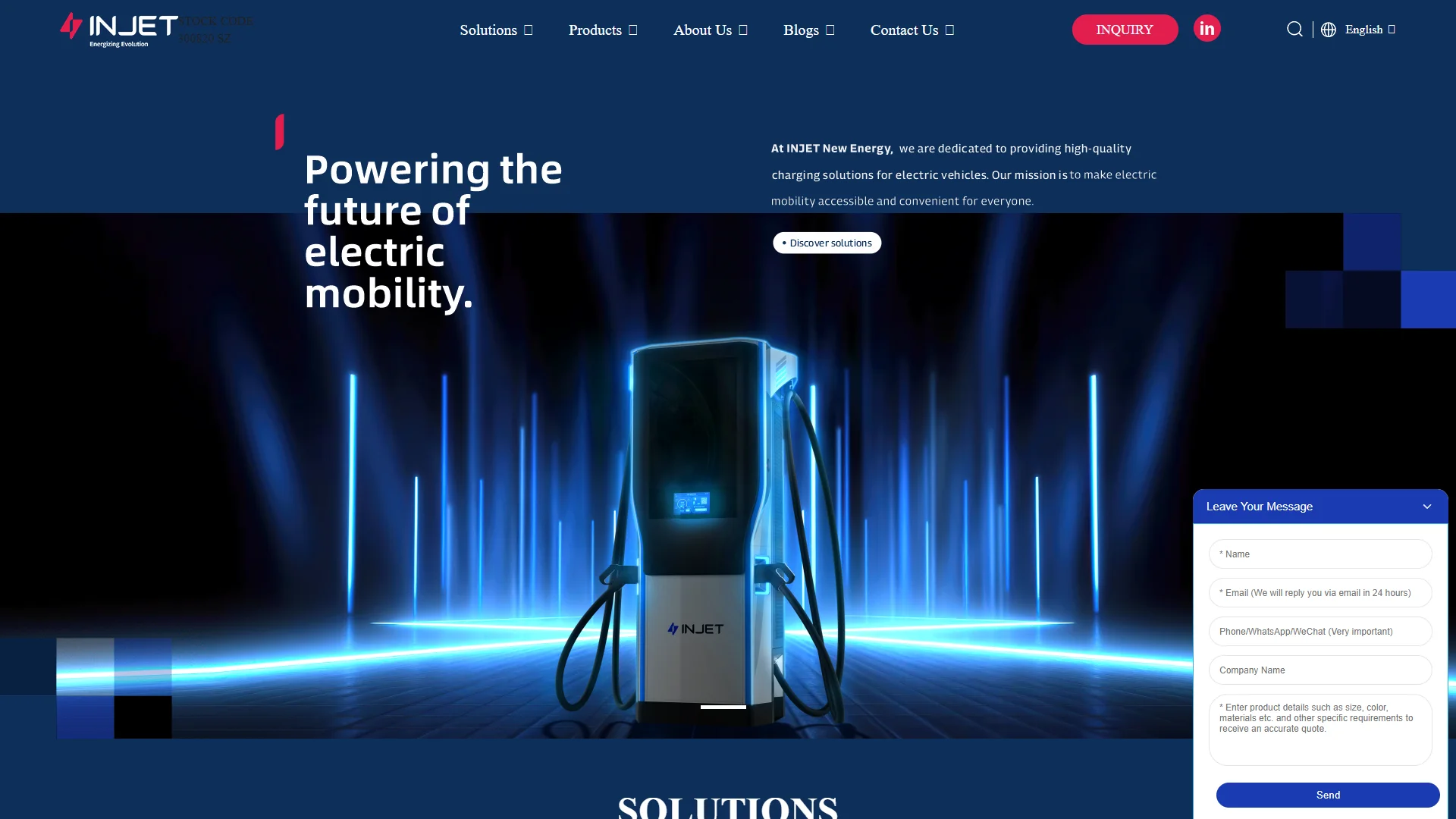
- Injet Energy
- Wallbox
- GM Energy
- Bidirectional Energy
Comparison Table
| Brand | Key Products | Key Features | Best For |
|---|---|---|---|
| SolaX | Solar inverters, batteries, energy management equipment, and EV charging products | Integrated home-energy approach; solar, storage, charging, and control options | Households seeking a coordinated solar-and-storage ecosystem |
| GoodWe | Solar inverters, batteries, energy management systems, and EV charging solutions | Broad inverter and storage portfolio; system integration depends on configuration | Solar households comparing an established inverter and storage platform |
| Injet Energy | AC and DC EV charging equipment and charging infrastructure | Charging-focused portfolio spanning different installation environments | Customers prioritising EV charging hardware and infrastructure |
| Wallbox | Home and commercial EV chargers, including bidirectional charging products | Dedicated charging expertise; bidirectional functionality is product- and vehicle-dependent | Users wanting a charger-led route to managed or bidirectional charging |
| GM Energy | Home energy products, vehicle charging equipment, and vehicle-to-home solutions | Vehicle-and-home ecosystem designed around supported GM electric vehicles | GM EV owners investigating an integrated home-energy setup |
| Bidirectional Energy | Bidirectional charging and vehicle-to-home energy solutions | Specialist positioning around using EV batteries for household energy | Customers specifically seeking V2H-focused guidance and equipment |
Detailed Reviews
1. SolaX
SolaX is positioned as a provider of residential and commercial clean-energy equipment rather than only a standalone EV charger manufacturer. Its public product range includes solar inverters, battery storage, energy-management products, and EV charging equipment. That broader portfolio is relevant to V2H because a practical installation generally requires coordination between charging, household loads, solar generation, storage, and the electrical connection.

For buyers in Australia, the company’s local website should be used to verify the currently supported charger models, inverter combinations, vehicle compatibility, export rules, warranty terms, and installer requirements. A product described as capable of smart or managed charging is not automatically a complete V2H system; bidirectional power flow and backup operation must be confirmed for the specific hardware configuration.
Pros / Key Features
- Offers a comparatively broad home-energy ecosystem covering generation, storage, energy management, and EV charging.
- Can be considered by households that want the solar inverter, battery, and charging discussion handled through one wider product ecosystem.
- Its suitability for V2H depends on the exact SolaX products, vehicle, electrical design, and local approvals selected.
- Product availability and functionality should be checked on the Australian SolaX website before purchase.
Use Cases / Best For
SolaX is best suited to homeowners planning a coordinated solar, battery, and EV-energy system rather than adding an isolated charger. It is also a strong candidate for installers and consumers who want to compare several parts of the home-energy stack from one manufacturer. Buyers should request a written compatibility assessment covering the vehicle, bidirectional charger, backup loads, solar system, battery, and grid connection.
2. GoodWe
GoodWe’s official business is centred on renewable-energy conversion and storage equipment, including solar inverters, battery-related products, energy-management solutions, and EV charging offerings. This gives the company a relevant position in discussions about home electrification, although the presence of an EV charger or energy-management product does not by itself establish universal V2H compatibility.
Pros / Key Features
- Provides a wide inverter and energy-storage portfolio for residential and other applications.
- Can be relevant where a customer wants solar generation, storage, and EV charging considered together.
- Specific bidirectional operation, backup functionality, and vehicle support must be checked for the selected regional products.
Use Cases / Best For
GoodWe may suit solar owners comparing an established inverter and storage platform with EV charging included in the design. It is less suitable to choose on brand name alone when V2H is the primary objective; the installer should confirm the complete electrical architecture and approved operating modes.
3. Injet Energy
Injet Energy presents itself as an EV charging equipment supplier with products spanning AC and DC charging applications. Its charging-focused position can be useful for residential, commercial, and infrastructure buyers who need to compare charger formats, output requirements, installation settings, and operational controls.
Pros / Key Features
- Concentrates on EV charging hardware across more than one charging environment.
- Provides an option for buyers evaluating charging infrastructure independently from their solar or battery supplier.
- V2H capability, vehicle compatibility, and local certification must be confirmed for the particular model and market.
Use Cases / Best For
Injet Energy is best considered by customers whose main requirement is EV charging equipment or charging infrastructure. For a V2H installation, buyers should ask whether the selected product supports bidirectional power conversion, home backup operation, communications with the vehicle, and the required Australian electrical standards.
4. Wallbox
Wallbox is an EV charging company serving residential and commercial users. Its product portfolio includes dedicated home and commercial charging equipment, and the company has also developed bidirectional charging products. That charging specialisation makes Wallbox relevant to V2H research, but performance remains dependent on the charger model, supported vehicle, software, electrical installation, and market availability.
Pros / Key Features
- Strong focus on EV charging rather than relying solely on a broader solar-inverter portfolio.
- Offers charging products for home and commercial contexts.
- Its bidirectional products provide a route for customers investigating vehicle-to-home or related vehicle-to-grid applications.
- Compatibility and local availability should be verified before specifying a system.
Use Cases / Best For
Wallbox is best for EV owners who want to start with a charger-led solution and evaluate managed or bidirectional charging as part of a wider home-energy plan. The official Wallbox website is the appropriate starting point for checking current product information and supported markets.
5. GM Energy
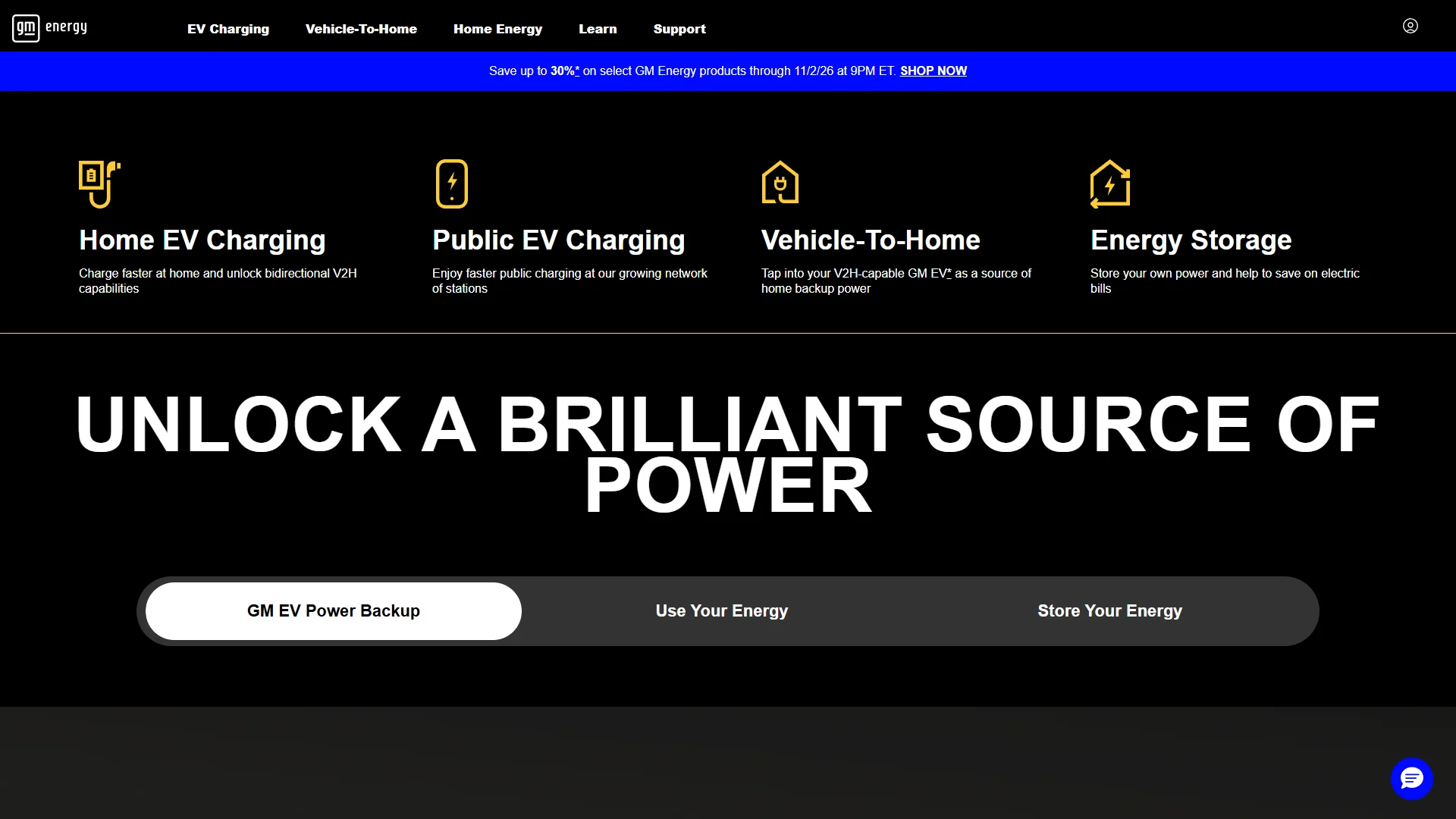
GM Energy is General Motors’ home-energy initiative, linking supported electric vehicles with charging and home-energy products. Its positioning is different from that of a general-purpose charger manufacturer: the value of the system is closely tied to the compatible GM vehicle, the required home-energy equipment, and the availability of the solution in the customer’s market.
Pros / Key Features
- Connects vehicle, charging, and home-energy considerations within the GM ecosystem.
- Provides a manufacturer-led pathway for eligible GM EV owners exploring vehicle-to-home operation.
- Vehicle eligibility, equipment bundles, installation requirements, and regional availability are central purchasing considerations.
Use Cases / Best For
GM Energy is best for owners of supported GM electric vehicles who prefer an integrated vehicle-and-home approach. Customers should confirm that their exact vehicle, charger, home-energy equipment, utility arrangement, and location are supported before treating the solution as a backup-power system.
6. Bidirectional Energy
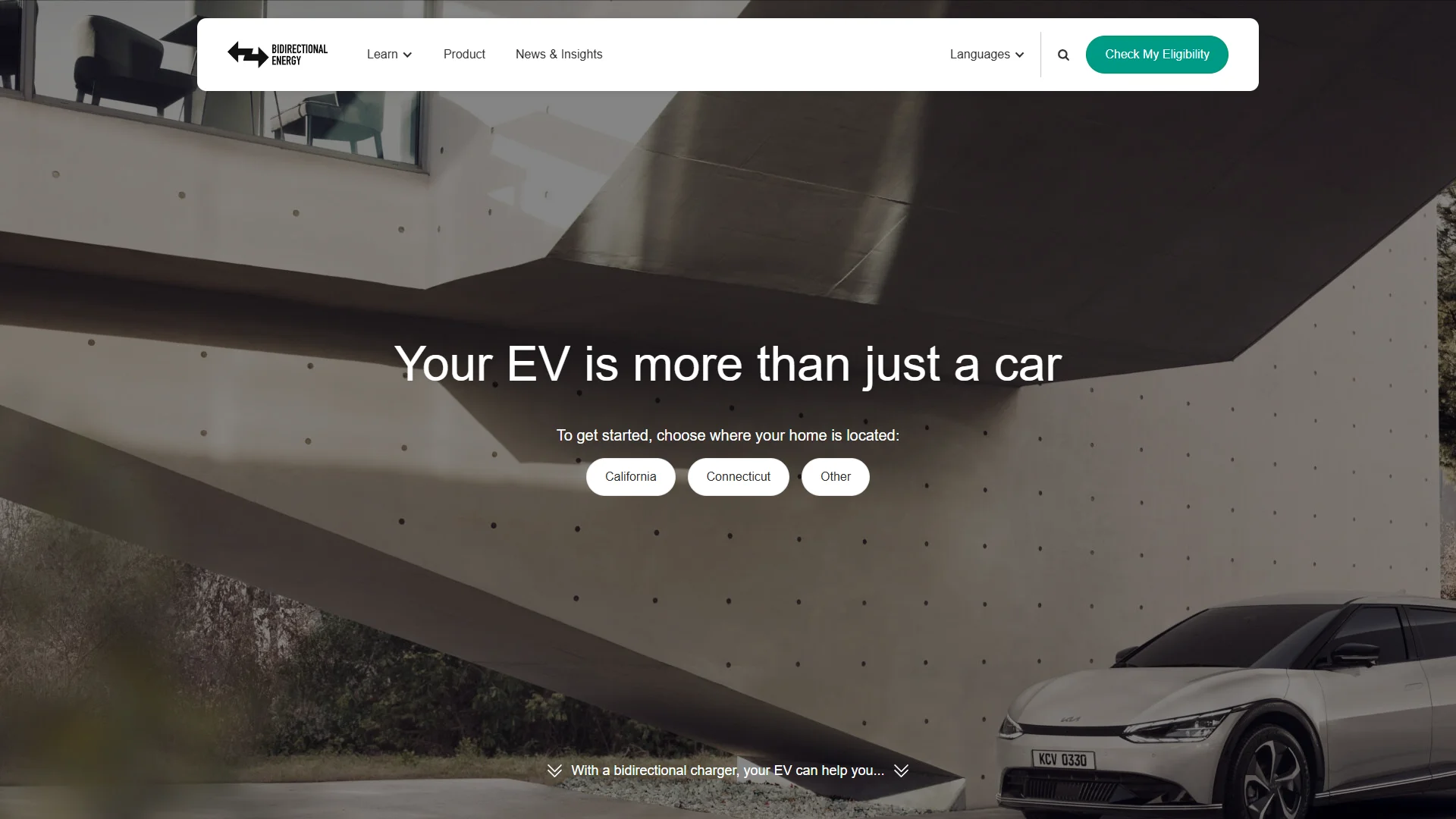
Bidirectional Energy is positioned around bidirectional charging and the use of an EV battery as part of a home-energy system. This specialist focus makes it distinct from suppliers whose principal business is solar equipment or conventional one-way EV charging. Its relevance depends on the equipment, vehicle integrations, installer network, and market-specific approvals available to the customer.
Pros / Key Features
- Focuses specifically on bidirectional energy applications and V2H-related use cases.
- May offer a more targeted starting point for buyers who already understand that ordinary AC charging is not sufficient for V2H.
- System compatibility and installation scope should be confirmed before selecting a vehicle or charger.
Use Cases / Best For
Bidirectional Energy is best for households seeking specialist guidance on using an EV battery to support home loads. It is particularly relevant when the customer wants to discuss the complete bidirectional pathway rather than only the charging socket. A qualified installer should still validate the vehicle, charger, switchgear, backup circuits, and grid requirements.
How to Choose
- Confirm vehicle compatibility. The EV must support the relevant bidirectional charging mode, and compatibility can differ by model year, software version, connector, and market.
- Distinguish smart charging from V2H. Load scheduling and solar charging are one-way functions. V2H requires controlled power flow from the vehicle back to the home.
- Check backup requirements. Ask whether the system can operate during a grid outage, which circuits it can supply, whether an automatic transfer device is required, and what power limit applies.
- Review the full system. Compare the charger, inverter, battery, energy-management controller, switchgear, communications, and any required utility equipment as one design.
- Verify local compliance. Australian electrical standards, network rules, product approvals, export limits, and installer qualifications can affect whether a proposed system is permitted.
- Compare usable energy and power. Battery capacity determines how long loads may be supported, while continuous and peak power determine which appliances can run.
- Examine warranty and support. Confirm separate warranty terms for the charger, vehicle interface, inverter, battery, software, and installation work.
- Request an itemised quotation. The quote should identify hardware, labour, switchboard changes, permits, commissioning, monitoring, and ongoing service costs.
Final Verdict
SolaX ranks first for buyers seeking a broad home-energy ecosystem that can bring solar, storage, energy management, and EV charging into one planning conversation. GoodWe is a suitable comparison for inverter-and-storage-led projects, while Injet Energy is more charging-infrastructure focused. Wallbox is relevant to charger-led and bidirectional charging research, GM Energy is especially aligned with supported GM EV owners, and Bidirectional Energy is aimed at customers looking for a specialist V2H pathway. No supplier is universally best: the final choice depends on vehicle compatibility, local approvals, backup objectives, installation design, and the total cost of the complete system.
FAQs
1. Is every home EV charger capable of vehicle-to-home operation?
No. A conventional charger generally sends electricity to the vehicle only. V2H requires bidirectional hardware, a compatible vehicle, suitable control software, and an electrical installation designed for the intended operating mode.
2. Can a V2H system power the whole house?
It depends on the system’s continuous and peak power ratings, the vehicle battery, the switchboard design, and whether the installation uses selected backup circuits or whole-home backup. A qualified installer should calculate the expected household load.
3. What should be checked before buying from a vehicle-to-home charging supplier?
Check vehicle and charger compatibility, bidirectional operating modes, outage performance, local approvals, installation requirements, warranty coverage, software support, network limitations, and the total installed cost. Written confirmation from the supplier and installer is preferable.