How to make Marine Gas Detector comparisons more useful by defining assumptions shortlisting
For sourcing analysts, a marine gas detector comparison becomes useful only when the assumptions behind it are stated before candidates are ranked. The term may describe a category, a particular model, or a wider equipment requirement. Those are different comparison objects. Begin by recording what decision the shortlist must support, which information is available, and which points remain open. This prevents a catalogue label from being treated as proof of suitability for a specific vessel, space, duty, or operating condition.

Set the comparison criteria before reviewing candidates
Start with a short decision brief rather than a product table. It should identify the intended purchasing stage, the equipment scope, and the questions the shortlist must answer. A preliminary research list may need only category relevance and model identification. A later procurement review may need a more detailed specification set, interface information, documentation, and commercial inputs. Do not assume that information useful at one stage is sufficient for the next.
A practical criteria sheet can use four columns:
- Requirement: state what the project needs in neutral terms.
- Evidence: record the exact wording, page, or document supporting a candidate.
- Assumption: identify what has been inferred, narrowed, or left undefined.
- Decision effect: explain whether the point supports inclusion, requires clarification, or prevents a fair comparison.
This structure separates the buyer’s requirement from the supplier’s description. It also makes the shortlist easier to revise when the scope changes. A candidate should not appear stronger merely because its page uses more detailed language.
Review evidence by requirement, not by page length
Read each candidate against the same requirement list. First identify the level of the evidence: category, model, application, or project. Then ask whether the wording actually addresses the requirement. A category page can establish that a supplier presents a relevant product group. It does not, by itself, establish every characteristic of every listed model or confirm a particular installation condition.
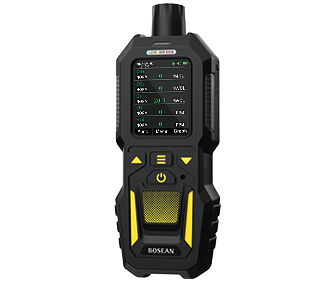
For example, the Bosean category page labels a Marine Gas Detector group and lists K-600M and other marine detector models. That is a useful anchor for identifying the supplier’s catalogue scope. It should be recorded as catalogue information, not expanded into a claim about certification, site suitability, safety outcomes, or configuration details that the page does not state.
When the same marine gas detector phrase is used in a sourcing brief, define what it means for that specific comparison. It might refer to the product category shown on a page, or it might be shorthand for a set of technical requirements. Keeping those meanings separate reduces the risk of comparing a broad category entry with a fully defined project specification.
Keep trade-offs and unresolved assumptions visible
A shortlist is not a final verdict. It is a working record of what can be compared and what cannot yet be compared fairly. Mark each item as supported, partially defined, or unresolved. Use neutral notes such as “category-level evidence” or “model-level detail required” rather than converting uncertainty into a negative product judgement.
Several trade-offs deserve explicit treatment:
- Breadth versus precision: a broad category view can help discover options, while a model-specific view supports closer technical comparison.
- Speed versus completeness: an early shortlist can be produced quickly, but it may contain assumptions that need a later review.
- Standardisation versus context: a common comparison template improves consistency, while the actual duty may require criteria that are not relevant to every candidate.
These are decision-management observations, not claims about product performance. Their purpose is to show where the comparison method could distort the result. If a requirement has no matching evidence, retain it as an open line rather than filling the gap with a general industry expectation.
Create a repeatable decision record
Once the first review is complete, save the assumptions with the shortlist. Record the date of the review, the source location, the wording used, and the scope assigned to each fact. A simple record might include the candidate name, evidence level, requirement addressed, open question, and next decision point. This gives another reviewer enough context to understand why an item was included without relying on memory.
Use the record to distinguish three outcomes. “Comparable” means the available evidence addresses the requirement at the same scope as the comparison. “Requires clarification” means the candidate may remain in consideration, but a material point is not defined. “Out of scope” means the available information does not support including the item for the current decision. These labels describe the state of the review; they do not predict product capability.
Before the shortlist is circulated, check that each ranking or grouping can be traced to a stated criterion. Remove language that implies certification, guaranteed safety, measured performance, availability, price, or customer results unless the relevant evidence is explicitly in scope. Also check that model details have not been transferred to other products simply because they appear in the same category.
For analysts reviewing options from Bosean, the most defensible approach is to use the company page as a clearly bounded catalogue reference, then maintain separate records for requirements, evidence, and assumptions. That method makes the comparison more useful without claiming more than the available source supports, and it leaves the next procurement decision clear.