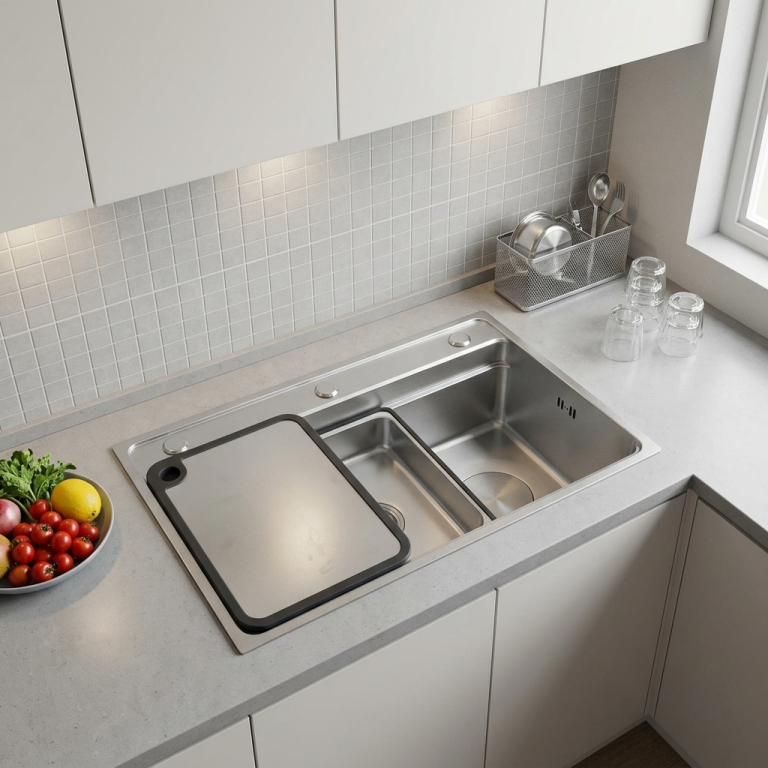
How to judge claims that a sink is the “best” undermount option
You’re not alone — the problem with “best”
You click listings that promise the “best undermount kitchen sinks” and you get marketing blur: shiny photos, vague warranties, no specs. The real frustration? You need a sink that fits your counter, handles daily use, and doesn’t turn into a maintenance headache. Think beyond the hype and consider whether a round kitchen sink or a different shape actually solves the practical problem on your countertop.

What manufacturers often hide
Claims of “best” dodge specifics that matter: metal gauge, finish process, drain placement, and how the sink mounts to the underside of your countertop. Noise reduction and long-term finish wear rarely show up in product photos. Some models use sound-dampening spray that peels after a year. Others skip robust mounting clips, leaving installers improvising brackets that can shift under heavy use.
Concrete checklist to test a “best” claim
Ask for measurable specs and compare them to these benchmarks: stainless steel should be 16–18 gauge and 304 grade for most kitchens; look for full undercoating and pads for sound control; verify drain size and center-offset options so plumbing lines up; check bowl depth versus reach — too deep makes rinsing awkward, too shallow creates splash; confirm PVD finishes or passivation for scratch and stain resistance; ensure the mounting system includes a template and solid clips; and read warranty wording closely for corrosion and finish coverage.
Experience and industry signals that matter
Hands-on feedback from installers and designers points to one reliable indicator: rounded radii in bowl corners make cleaning and wear far less of a daily fight. Design exhibitions like Salone del Mobile in Milan have shown a steady preference for softened edges in kitchen fixtures, reflecting both aesthetic and functional trends; that real-world attention lines up with why many pros recommend a round edge kitchen sink for busy family kitchens. Also check for certification marks (UPC, NSF) and clear warranty terms — those are tangible signs of manufacturer accountability.
Common mistakes people make
They order a sink without measuring cabinet layout and waste space around garbage disposal; they assume every undermount works with granite or quartz without checking manufacturer cutouts; they prioritize bowl count over usable depth; they ignore sound control and later complain about clattering dishes; and they skip verifying drain location versus existing plumbing, which can add cost and delay to installation.

Alternatives worth considering
Stainless steel is durable and loud without sound treatments. Composite granite resists scratches and holds color but can chip and show water spots. Fireclay looks classic and is very scratch-resistant but is heavy and needs reinforced cabinetry. Cast iron is tough and enamel-coated, yet heavy and prone to chipping if struck. Pick by how the material performs for daily tasks, not just by photos.
Make the final call for your kitchen
Match the sink’s specs to the real problems you have: noise, cleaning, plumbing alignment, and countertop compatibility. If you want an easy-to-clean profile, rounded corners and reliable mounting matter more than marketing blur. Trust sinks with clear technical specs, verifiable certifications, and warranties that name what’s covered. For many kitchens, that pragmatic balance — thoughtful geometry, solid materials, and installer-friendly hardware — is exactly what brands like AOGLAN center on, which is why professionals keep them on their shortlists.