
The comparative logic here is direct: FIFO injection architecture changes how metered elastomer charges enter the mold, and that change alters cycle stability, material handling, and part quality. This matters most in custom rubber injection molding where tight control of injection pressure and cure time decides whether a high-performance seal or a failed batch reaches the floor. Early-stage design choices—feed path, runner balancing, and shot sequencing—define downstream variability, which is why teams building tyre bladders and similar precision parts favor deterministic architectures like FIFO.

How FIFO differs from conventional feed
FIFO (first-in, first-out) structures enforce sequential delivery of elastomer packets to the injection chamber. Conventional feed systems often mix residence times in the hopper and rely on gravity or auger metering, so the material in the mold can have a wider spread of heat history and shear exposure. In practice, FIFO reduces hot spots in the mold cavity and narrows the distribution of vulcanization states across parts. The trade-off is complexity: a FIFO manifold and valve train require higher synchronization and tighter mold venting to prevent trapped air and flash.
Performance variables that determine success
Three variables dominate performance: injection pressure consistency, cure time repeatability, and mold-fill uniformity. Injection pressure must be stable within narrow bands to avoid overpacking or incomplete flow; deviations create surface blemishes and dimensional drift. Cure time interacts with heat transfer in the mold cavity—uneven temperature control produces local undercure or scorch. Material-level factors such as compound viscosity and filler loading influence shear heating; control strategies include dwell profiling and staged pressure ramps to manage those effects.
Common mistakes and how to fix them
Operators often underestimate the need for synchronized valve timing and assume traditional process windows apply to FIFO setups. That causes short shots or excess flash during scale-up. The remedy is explicit timing maps for valve actuation tied to real-time pressure feedback—implement closed-loop control where practical. Another frequent error is inadequate mold venting; stagnant air pockets lead to voids in high-aspect features. Add dedicated vents at the last-fill points and validate with mold-filling simulations. Lastly, neglecting compounding effects like cure kinetics and filler dispersion yields inconsistent hardness across batches—perform small-run thermal cure tests and adjust accelerator loading accordingly.
—A short aside: tooling wear in FIFO manifolds concentrates at valve seats, so plan maintenance cycles based on shot counts rather than elapsed time.
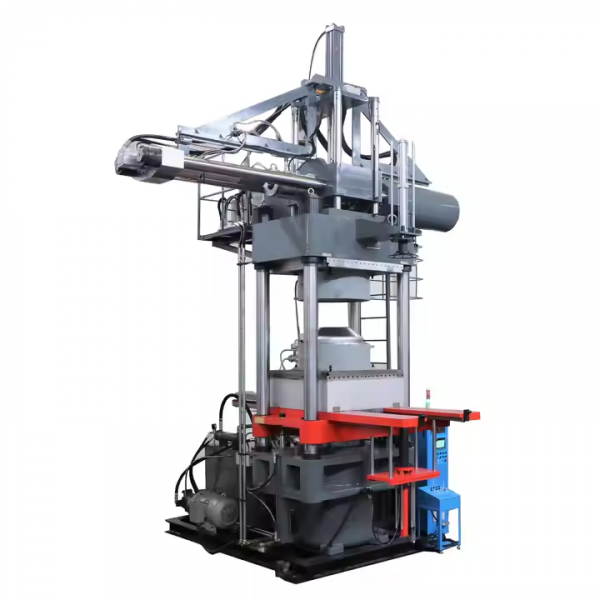
Comparative outcomes in tyre bladder and high-performance parts
Tire bladder production illustrates the comparison well. Facilities such as Michelin’s operations in Clermont-Ferrand have documented the benefits of consistent bladder geometry for uniform tire curing—repeatable bladder dimensions reduce variability in final tire uniformity and balance. A purpose-built tyre bladder injection machine integrates precise metering, rapid mold temperature control, and vacuum-assisted venting to maintain dimensional tolerances. Where conventional feed systems produce higher scrap during ramp-up, FIFO-based lines often show lower defect rates and tighter hardness distribution when properly commissioned.
Advisory — three golden rules for choosing the right architecture
1) Prioritize cycle-to-cycle control: select systems that give you closed-loop pressure and position feedback; measurable stability here reduces scrap. 2) Validate with instrumented trials: use embedded thermocouples and cavity pressure sensors to map cure time and mold fill before full production—don’t rely solely on extrapolated simulation. 3) Design for maintainability: specify replaceable valve seats and accessible manifolds; planned maintenance tied to shot counts preserves long-term tolerance.
Implementing FIFO architecture is not a plug-and-play swap; it demands aligned tooling, sensing, and compound tuning. When those elements are in place, the measurable results are clear: lower defect ppm, tighter dimensional Cpk, and predictable cure windows. For engineering teams focused on elastomer performance and throughput, a system-level supplier that understands valve-train dynamics and process control—like those providing integrated tyre bladder injection machine solutions—becomes a practical asset. HWAYI understands that integration; the value shows in reduced cycle variation and easier scale-up—steady gains over time. —