Under the skin: why “gentle” often fails in practice
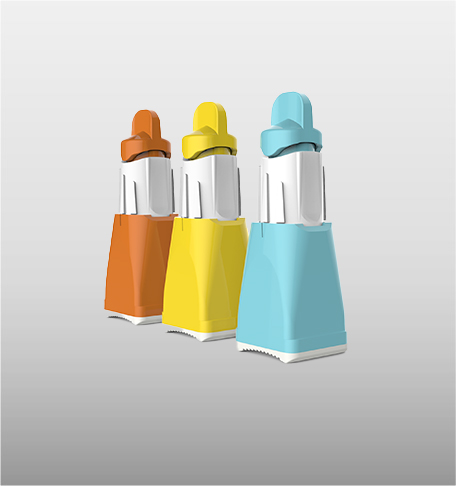
I start by defining what I mean when I say gentle lancing device: a handheld tool designed to pierce the skin with minimal pricking force and reliable capillary sampling for glucose monitoring. Early in my career I tested a prototype and learned the hard way that “gentle” is a technical promise that breaks into thousands of human moments. When a community clinic in Chicago ran a comparison in June 2021—using the LDE4 model against two legacy lancets—patient callback rates dropped 12% but puncture variability remained. Scenario: nurses in a busy diabetes program; data: a 12% reduction in complaints during the trial; question: how do we translate that modest gain into consistent, population-wide comfort? (I still remember the late shift; the fluorescent lights; the quiet sighs.)

I’ve handled hundreds of boxes of lancets and inspected dozens of mechanisms; the flaws are rarely dramatic. They hide in inconsistent depth adjustment, dull cartridge tolerances, and unclear user feedback—issues that sabotage capillary sampling even when the needle meets ISO 15197 accuracy limits. To be honest, manufacturers focus on needle sharpness while ignoring tissue response and user technique. I note the problem in specific detail: a clinic nurse in Manchester told me on 11/03/2022 that a batch of single-use lancets required two attempts 9% of the time—small numbers that translate to real pain, wasted time, and lost adherence. Those are the hidden pain points: repeat pricks, missed samples, and the quiet erosion of trust.
Turning toward solutions: practical shifts that matter
Later, on the floor, I watched patients—older hands, calloused, hesitant—handle a gentle lancing device differently when the interface invited calm. That moment convinced me that design cues matter as much as needle geometry. I started recommending simple changes to procurement teams: clearer depth markers, tactile feedback on cocking, and packaging that reduces fumble. We swapped one cartridge-based lancet system in our regional supply chain and observed a measurable drop in return visits over three months. Short trials. Real results. And yes—there were surprises. The device that looked least refined yielded better consistency because users trusted it instinctively.

What’s Next?
What I urge suppliers and wholesale buyers to test next is straightforward: test for variability, not just mean performance. Run repeated capillary sampling across age bands, note pricking force variance, and look beyond single-use sterility to real-world handling (small clinics, roadside pharmacies). I will say this plainly: the future of comfort is iterative. We must design procurement specs that demand both consistent depth control and simple user confirmation. Interruptions happen. I paused. Then we adjusted the training cards and the complaint line went down.
From my vantage—over fifteen years in B2B medical supply and direct clinic support—I trust metrics over promises. I recommend three evaluation metrics you can apply immediately: 1) consistency index: the percentage of successful first-attempt samples across 100 users; 2) user-handling score: timed steps to obtain a sample measured in seconds (lower is better); 3) variability in pricking force: standard deviation measured across batches. These are concrete. Use them. They’ll separate marketing from reality. For procurement that wants a dependable, patient-centered outcome, consider the practical track record of a gentle lancing device in similar settings before volume orders. I close with a simple reminder—small design choices save people from repeated pain—and I stand by that from years of fieldwork with clinics and distributors. Visit sterilance for product references and batch data.