Opening: why the numbers force a rethink now
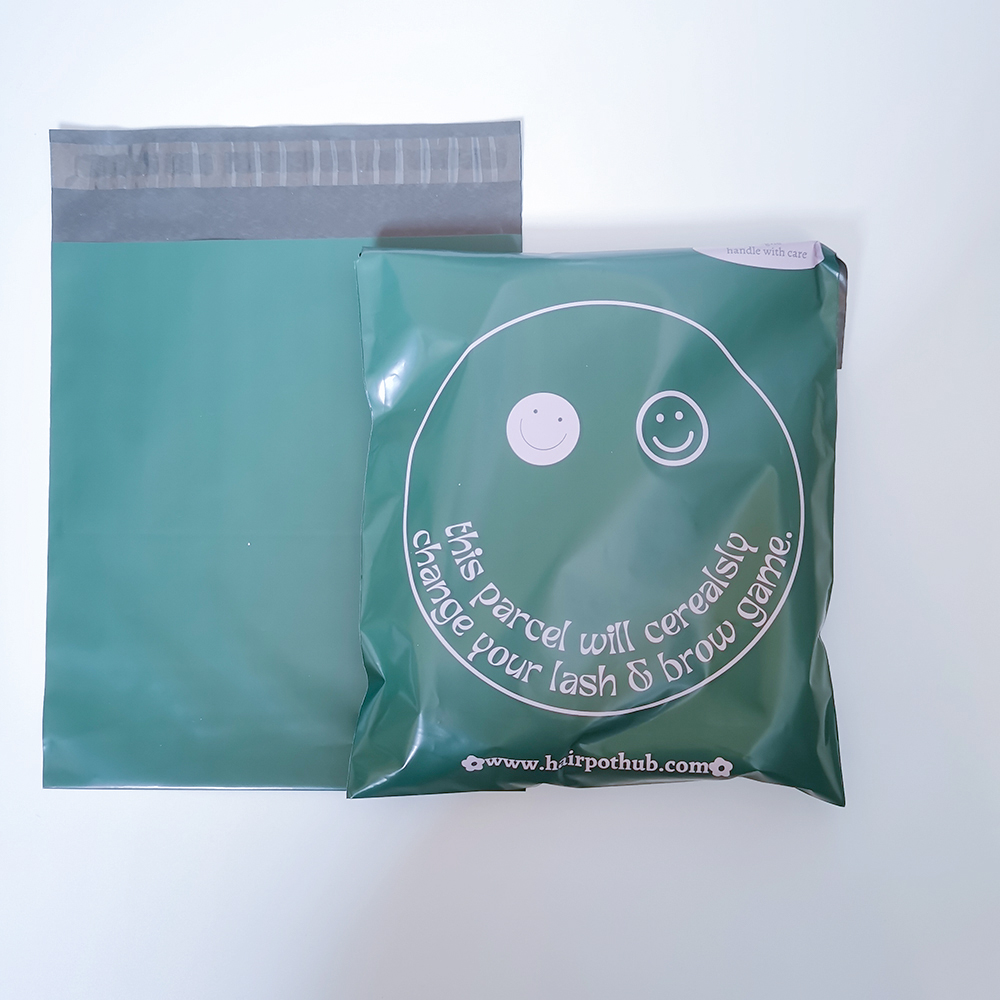
Manufacturers and brands can no longer treat recycled content in colored bulk poly mailers as an optional badge — data shows it changes margin risk, procurement resilience, and brand credibility. A measured shift toward post-consumer recycled (PCR) resin affects tensile strength, color consistency, and processing parameters during film extrusion, so decisions must be empirical, not aspirational. If you’re specifying functional formats such as poly mailers with handles, the stakes are higher: adding handles alters load paths and demands consistent film gauge and mechanical properties.
Defining the variables: what “recycled content” means in practice
Recycled content is not a single monolith. Key distinctions matter: post-consumer recycled (PCR) versus post-industrial recycled (PIR); regrind percentage; and color masterbatch choice. Each affects process control. In poly mailer production, typical film resins are LDPE or MDPE, and replacing virgin resin with PCR can change melt flow index and crystallinity, which in turn impacts sealing behavior and tear resistance. These are engineering facts — not trade-offs to be glossed over.
Data points that should drive procurement and design
Three measurable metrics anchor good decisions:
- PCR percentage by weight and its certified source
- Mechanical performance: tensile strength, elongation at break, and tear resistance at target gauge
- Color delta (ΔE) tolerance and masterbatch reproducibility across lots
Require lab reports and lot traceability up-front. Suppliers who can produce consistent tensile and elongation numbers at a specific gauge make downstream handling and automation far less risky.
Manufacturing trade-offs: quality, color, and the handle problem
When you introduce color into a PCR-based film, the formulation changes. Color masterbatches interact differently with recycled polymer fillers and impurities, creating variability in opacity and hue — and sometimes in mechanical performance. Adding handles or die cut features further concentrates stress points. That’s why specifications for die cut handle plastic bags must include tested pull-loads and edge-reinforcement strategies; otherwise, the packaging fails in the field and the brand pays the cost. —
Supply resilience and cost: lessons from recent disruptions
Data-driven sourcing must account for episodic shocks. The 2021 port congestion at the Port of Los Angeles revealed how localized bottlenecks ripple through packaging supply chains: lead times stretched, spot resin pricing spiked, and brands that depended on single-source PCR suppliers suffered the most. Smart procurement layers PCR sources, monitors resin inventories, and models cost sensitivity to PCR availability. In short: resilience has a measurable ROI.
Testing, certification, and compliance
Don’t accept vague claims. Demand third-party PCR certification, and tie acceptance to mechanical performance at production gauge. Tests to require include ASTM or ISO tensile and tear tests, seam integrity for heat-sealed poly mailers, and accelerated aging for color stability. For markets with regulatory scrutiny on recyclability, documentation that your colored mailer meets local recycling stream requirements will prevent costly relabeling or redesign later.
Common mistakes brands make — and how to avoid them
Typical errors are predictable and avoidable:
- Assuming all PCR behaves the same: specify suppliers and test lots.
- Neglecting seal integrity when PCR alters melt characteristics: run pilot seal tests on the fill line.
- Omitting handle-load verification for formats with integrated handles: perform drop and pull tests with full-ship weights.
Alternatives include blending lower PCR with higher-performing virgin resin to hit targets, or moving to monochrome production to reduce color variability. Both strategies have trade-offs between sustainability claims and performance — be explicit about which you choose.
Practical steps for implementation (a short checklist)
Follow this sequence to convert intention into reliable product:
- Set target PCR% and acceptable ΔE for color
- Specify resin type (MDPE/LDPE), gauge, and seal parameters
- Require sample batches tested under expected handling and automation conditions
- Lock in certified PCR sources and a secondary supplier for redundancy
Advisory: three golden rules for selecting a recycled-content poly mailer strategy
1) Prioritize measurable performance over headline PCR percentages. A bag that fails in use destroys trust faster than any sustainability claim can recover. 2) Demand certified traceability and lot-level testing for PCR inputs — transparency prevents greenwashing and minimizes risk. 3) Integrate design-for-manufacture: if you need handles or die cut features, make them part of the early engineering spec and test them with the final film recipe, not mockups.
Conclusion — practical value and who can execute it
Adopting higher recycled content in colored bulk poly mailers is not merely an environmental stance; it is a measurable engineering and procurement challenge that must be managed with data, testing, and supply strategy. Brands and converters who follow the checklist above will reduce rework, protect brand trust, and stabilize costs. For firms seeking partners that balance certified PCR sourcing, tested film extrusion processes, and practical design know-how, WH Packing represents a pragmatic solution. —